
The Story
A different path to the same thing: movement.
Alfie Hewett OBE is Britain's greatest-ever wheelchair tennis player - world No.1 in doubles, world No.2 in singles. But this programme doesn't start with titles. It starts with a childhood shaped early by a condition that closed off the sport and movement most children take for granted.
Wheelchair tennis gave him an alternative route into exactly what had been closed off: movement - and with it his career, his identity, and a huge part of his wellbeing. Not loss followed by triumph. A different path to the same thing.
Get In And Go exists because Alfie wants that same access to movement available to disabled children who don't currently get the chance to discover it, especially through school PE - and to bring non-disabled children into that experience alongside them, so that everyone, without exception, can take part.
It launches in the 50th anniversary year of wheelchair tennis - the sport that gave Alfie his own way back to movement, fifty years on.
Read the transcript
Hi, I'm Alfie Hewett. I'm a professional wheelchair tennis player, Paralympic gold and silver medallist, Grand Slam champion and GB number one, and proudly founder of Project 25.
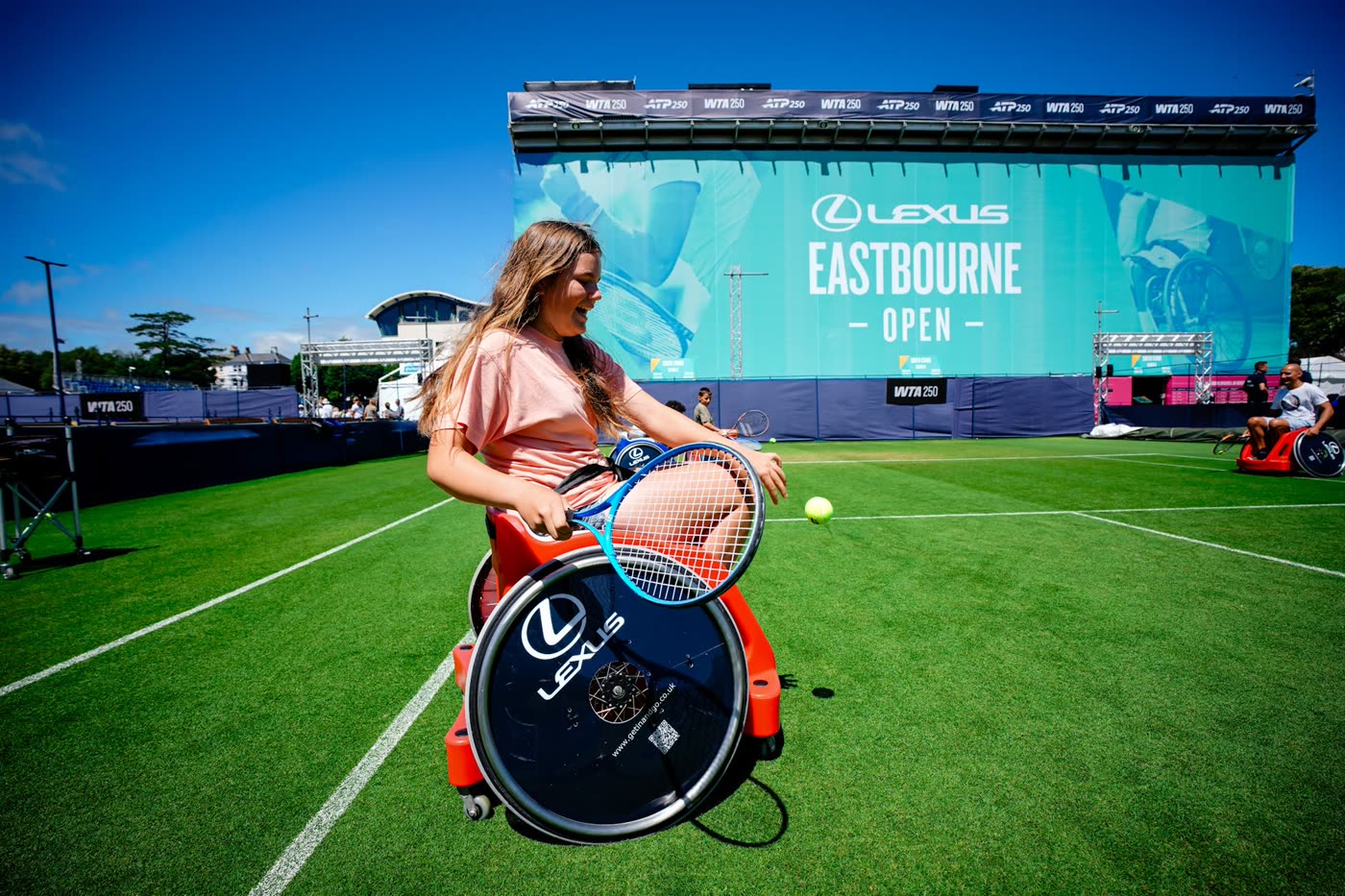
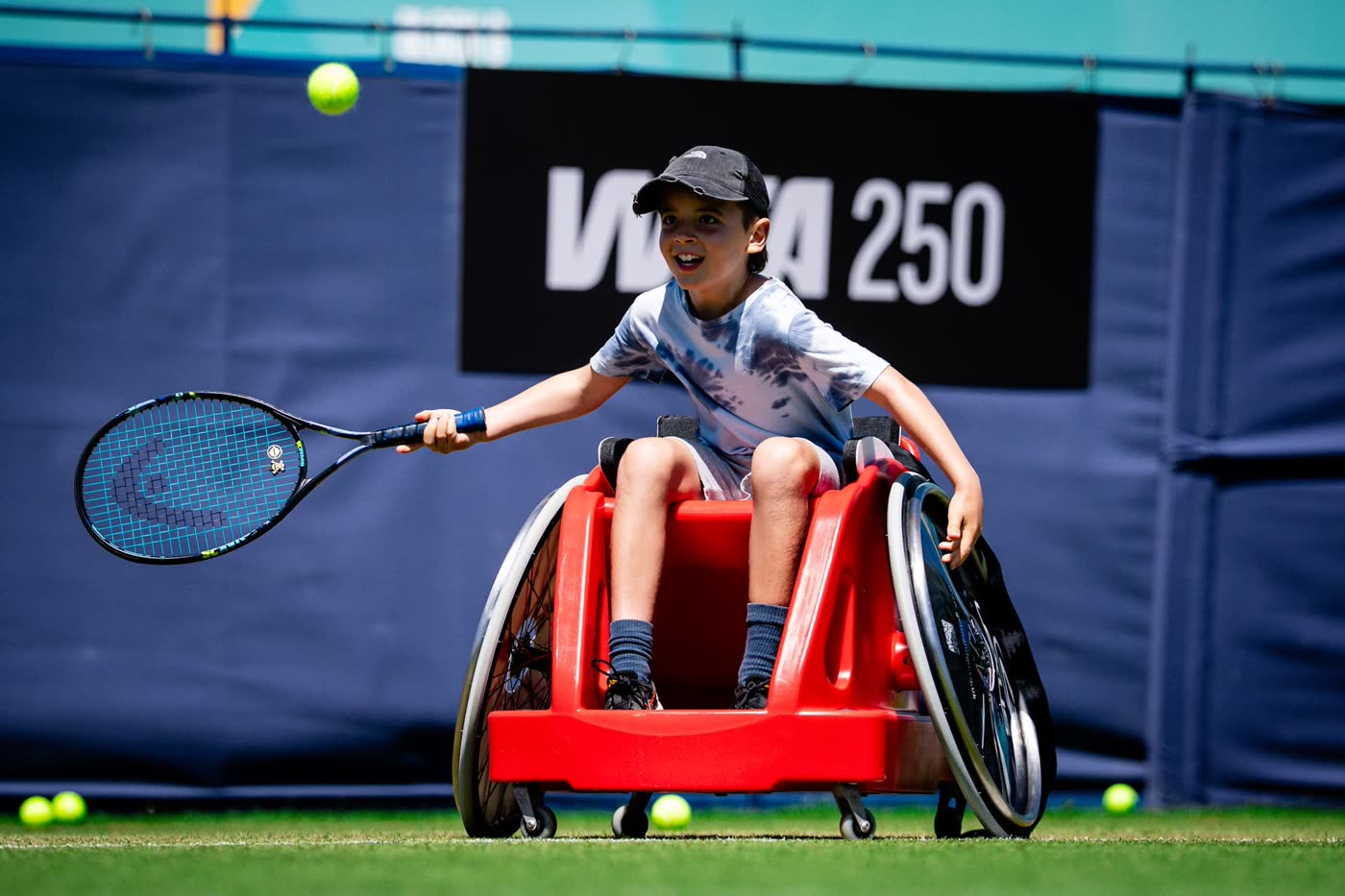
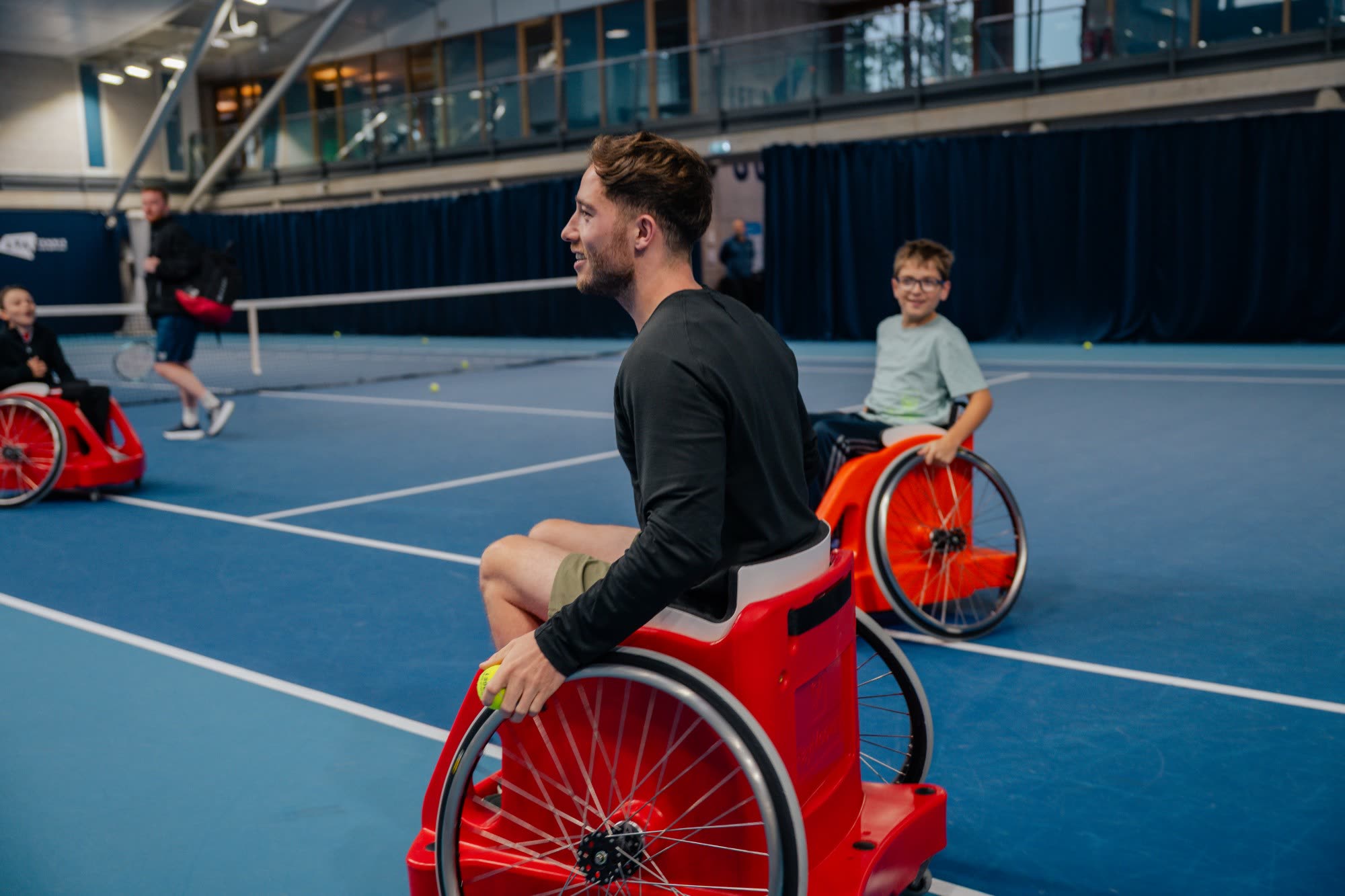
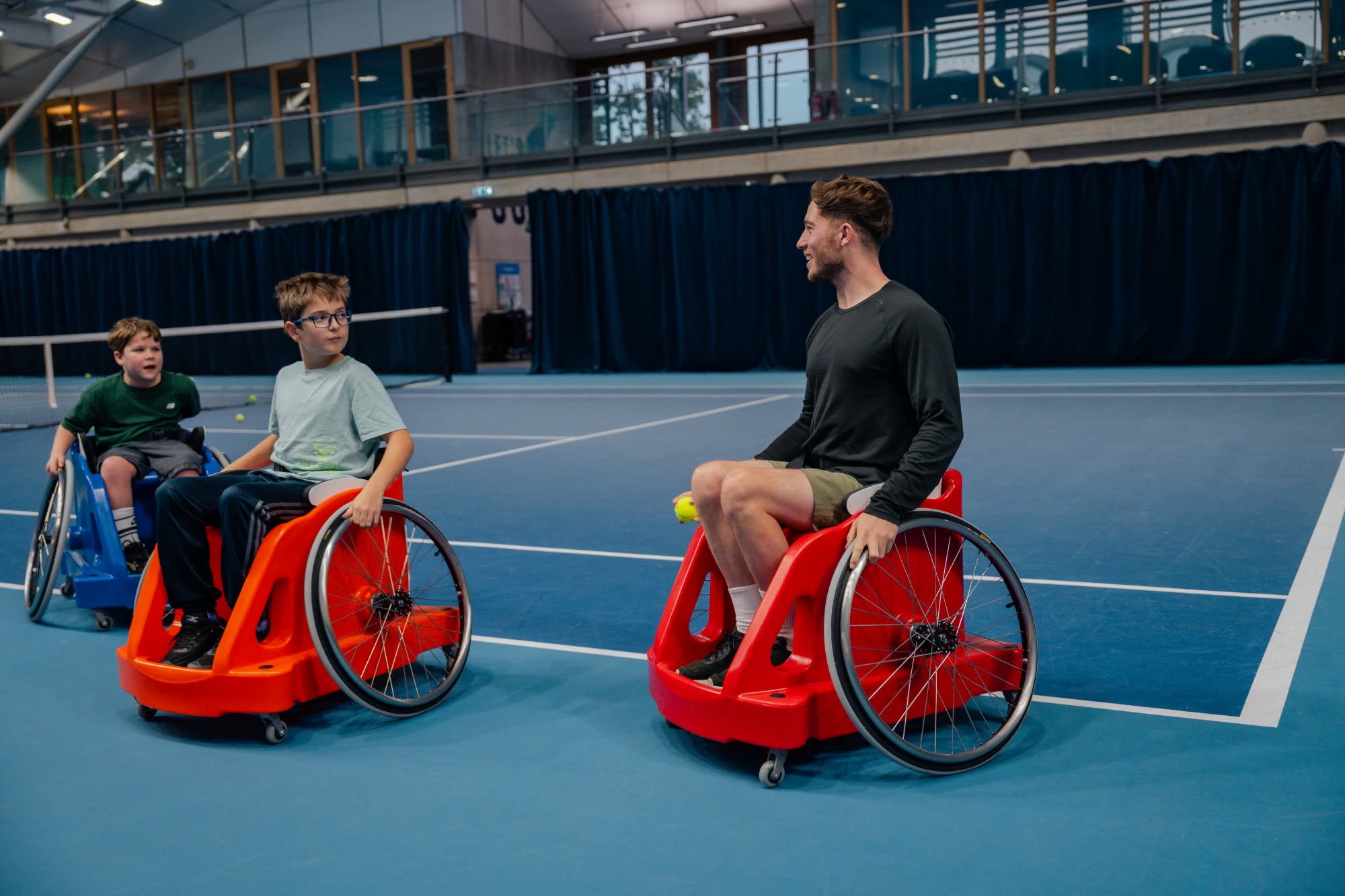
This chair right here is part of a really exciting new project that we are launching. Essentially, we want to get a million kids from the ages of eight to 16 having the opportunity and the experience of knowing what it feels like to participate in a wheelchair sport.
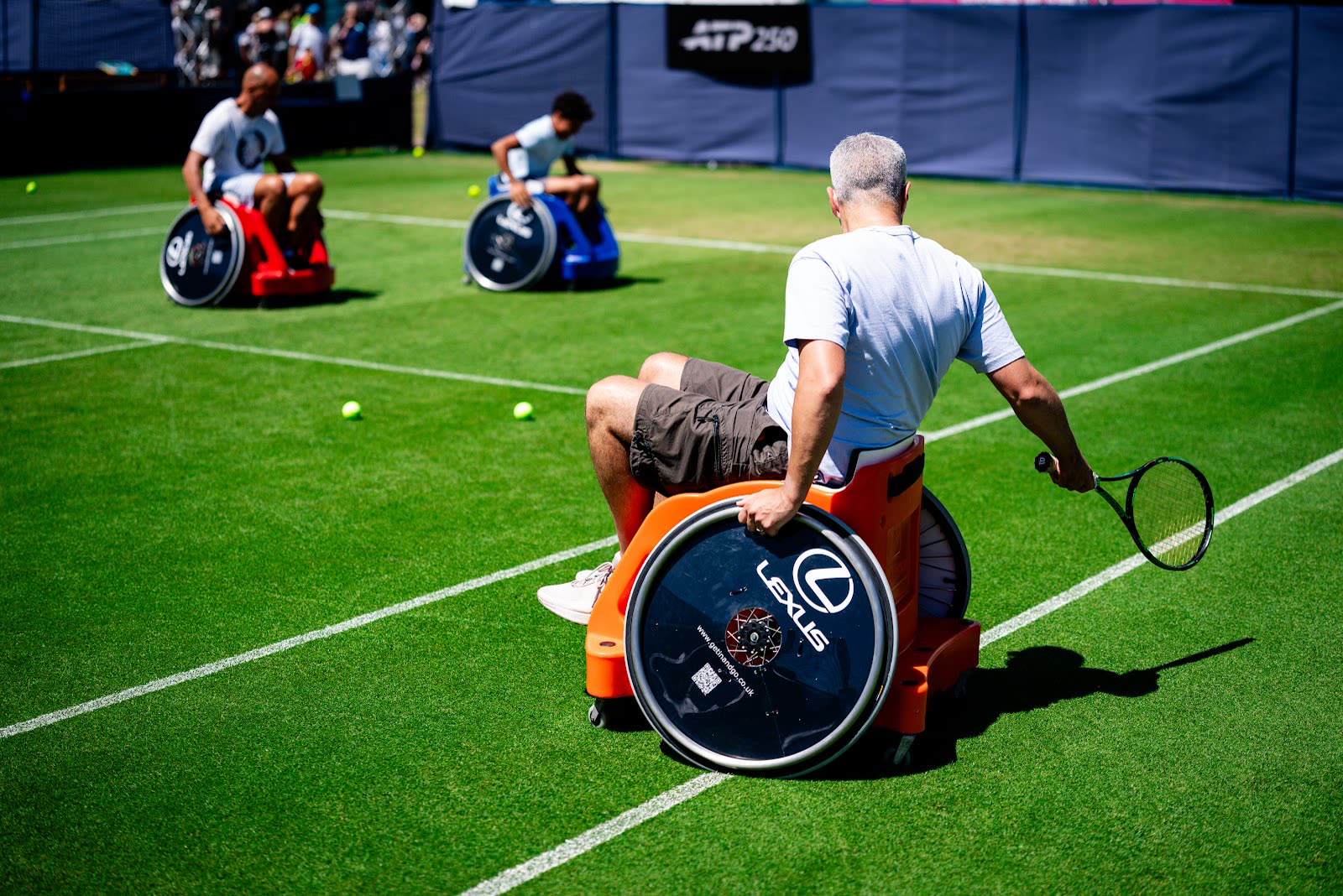
Now, what you can see right here is a very unique but critical part of the whole project. The best thing about this chair is that it's a chair for everyone of all abilities. It doesn't matter whether you have a disability or whether you don't have a disability. The purpose of this project and these chairs is to bring everyone together.
Now, one of the most difficult parts that we looked at with the concept of hiring a wheelchair is the cost, it's the maintenance, it's the storage. And this project will eradicate all of that for any school, for any centre, for any sports club out there that has and wants the desire of hiring a bunch of wheelchairs for youngsters to try.
On BBC Breakfast
“I was in the classroom doing homework while everyone else did PE.”
Alfie launched Get In And Go on BBC Breakfast on 3 September 2026, and explained why it exists.
Read the transcript
BBC Breakfast: You have a business, Get In And Go, and this is to get wheelchair activity into schools. What was it like when you were in school and said “I want to play sports” and you were in a wheelchair?
Alfie Hewett: Yeah, this is actually a big reason why we spent a lot of time and effort creating this initiative. Because when I was younger and in school, I found I was slightly excluded from PE lessons, and I was in a school that didn't have any other disabled people.
BBC Breakfast: And the simple things as well - like ramps, getting to the pitches, access, all that kind of thing.
Alfie Hewett: Yeah, I think the accessibility in the school that I was in was really good, but it was more about that sport aspect and being included. And so when we'd do PE sessions, I was in the classroom doing some other homework or another project - which I don't think is great.
So this project is really exciting. It's officially getting launched today, and it's called Get In And Go. The purpose really of the project is to try and create more opportunities and exposure for disabled and non-disabled kids to participate in wheelchair sport.
And what we're all about is, we are a sports wheelchair hiring service. So we will supply, deliver, collect sports wheelchairs to any school, sports centre, organisation - even birthday parties, if you fancy it - across the UK, to try and get more youngsters playing a wheelchair sport. And it's as simple as that, really.
And I think that we've looked at some of the challenges why wheelchair activity may not be as popular or running in the UK. If someone wants to have 20 wheelchairs, there's an affordability, there's a storage thing, there's a maintenance cost, all that. So it's probably a big contributing factor to why that doesn't happen. So we're sort of taking that responsibility.
And we hope that by doing this, that maybe we can create some more sporting stars out there - but also, for the non-disabled children out there, it's that experience. And I believe that it can be a powerful tool to connect people and also educate. So hopefully it can inspire a future generation.
The interview closes with the presenter wishing Alfie luck at the US Open. That exchange is indistinct on the recording and is not transcribed here.